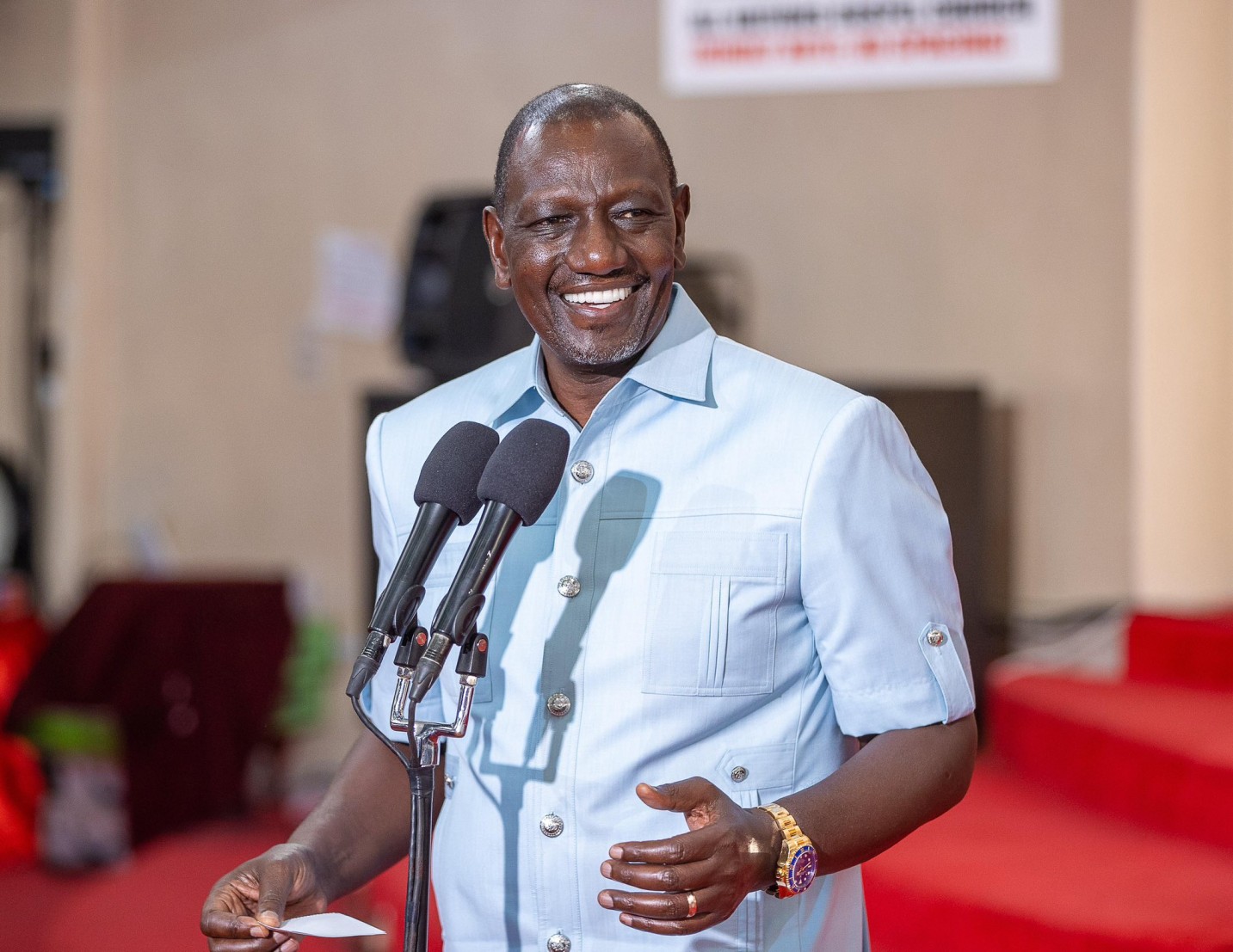
President William Ruto confirmed that Nairobi’s future lies in opportunity as the government commited Sh200bn to build 123,000 homes and 17 markets.
He said 45,000 youths are earning livelihoods through the Nairobi River clean-up, while 48,000 are engaged in the affordable housing programme.
In a statement posted on Sunday after inspecting Gikomba Market and engaging with residents, the president said the city’s residents were focused on progress rather than polarising politics.
“The enterprising people of Nairobi County have no appetite for backward politics fueled by hatred, division, or tribalism,” he said.
Instead, he added, “their eyes are fixed on opportunity, on growing their hustles, expanding their enterprises, and securing a better future for their families.”
Framing development as a shared national responsibility, President Ruto said government action must reflect that public ambition.
“Our duty is to match that determination with action,” he said, describing what he termed bold and practical investments aimed at reshaping the city’s economic foundations.
At the centre of that agenda is a major housing and markets programme. The president said the government was “committing Sh200 billion toward the construction of 123,000 affordable homes and the development of 17 modern markets that will give traders safer, cleaner, more profitable places to do business.”
The plan seeks to address both housing shortages and the long-standing challenges faced by traders operating in crowded and often unsafe markets.
The focus on markets was reaffirmed by the visit to Gikomba, one of the largest open-air markets in East Africa.
The area has frequently been associated with congestion, fire outbreaks and poor sanitation, making it a symbol of both Nairobi’s economic energy and its infrastructure gaps.
By linking market redevelopment with wider urban renewal, the president presented a vision of a city built around enterprise and dignity.
The President said the impact of the investment drive was already visible. “This renewal is visible across the city,” he said, listing improvements that touch daily life.
“Streets are being lit. Roads are being upgraded. Health coverage is expanding.” He also pointed to environmental reforms, saying a comprehensive waste management plan is taking shape to restore order and cleanliness in Nairobi.
Waste management has long been a major challenge for Nairobi, with rapid population growth straining collection systems and disposal sites.
By highlighting sanitation and order alongside roads and lighting, the president linked urban services to broader goals of public health and safety.
Employment, particularly for young people, formed the core of the president’s message. “Most importantly, this transformation is opening doors for our young people,” he said, positioning public works and housing as engines of job creation rather than purely infrastructure projects.
He cited specific figures to underline the scale of employment. “Today, 45,000 youth are earning a livelihood through the Nairobi River clean-up,” he said, referring to a programme aimed at rehabilitating the polluted river and its surroundings.
He added that housing construction was also absorbing labour, noting that another 48,000 are actively engaged in the affordable housing programme.
Beyond physical projects, the President said further opportunities were emerging through skills and mobility initiatives.
“Thousands more are stepping into opportunity through digital and labour mobility initiatives that connect talent to jobs and enterprise,” he said, suggesting a longer-term strategy to link Nairobi’s workforce to evolving economic sectors.
Taken together, the remarks outline a political narrative that places work, enterprise and visible change at the heart of governance in the capital.
By emphasising opportunity over division and statistics over slogans, the president sought to frame Nairobi’s renewal as both an economic mission and a unifying national project.


























Comments
Sign in with Google to comment, reply, and like comments.
Continue with Google